

Automotive suppliers are automating at an unprecedented rate. Plant managers, manufacturing engineers, QA managers, operations directors, and automation specialists are all under pressure to do more with less. They face tight production schedules, strict quality requirements, and workforce shortages.
Many are turning to robots, machine vision, and AI to boost output and consistency on the factory floor. The trend is industry-wide. In the U.S. alone, car makers and parts suppliers accounted for 40% of all new industrial robots installed in 2024.
This article highlights five practical applications where robotic automation delivers value for automotive OEM suppliers. Whether you’re overseeing a Tier‑1 plant or managing a small Tier‑3 operation, these automation approaches can help streamline your processes.
The New Playbook for Automotive Efficiency
From OEMs and Tier‑1 giants to Tier‑3 specialists, automation has become a lever for speed, quality, and adaptability.
1. Automated Assembly
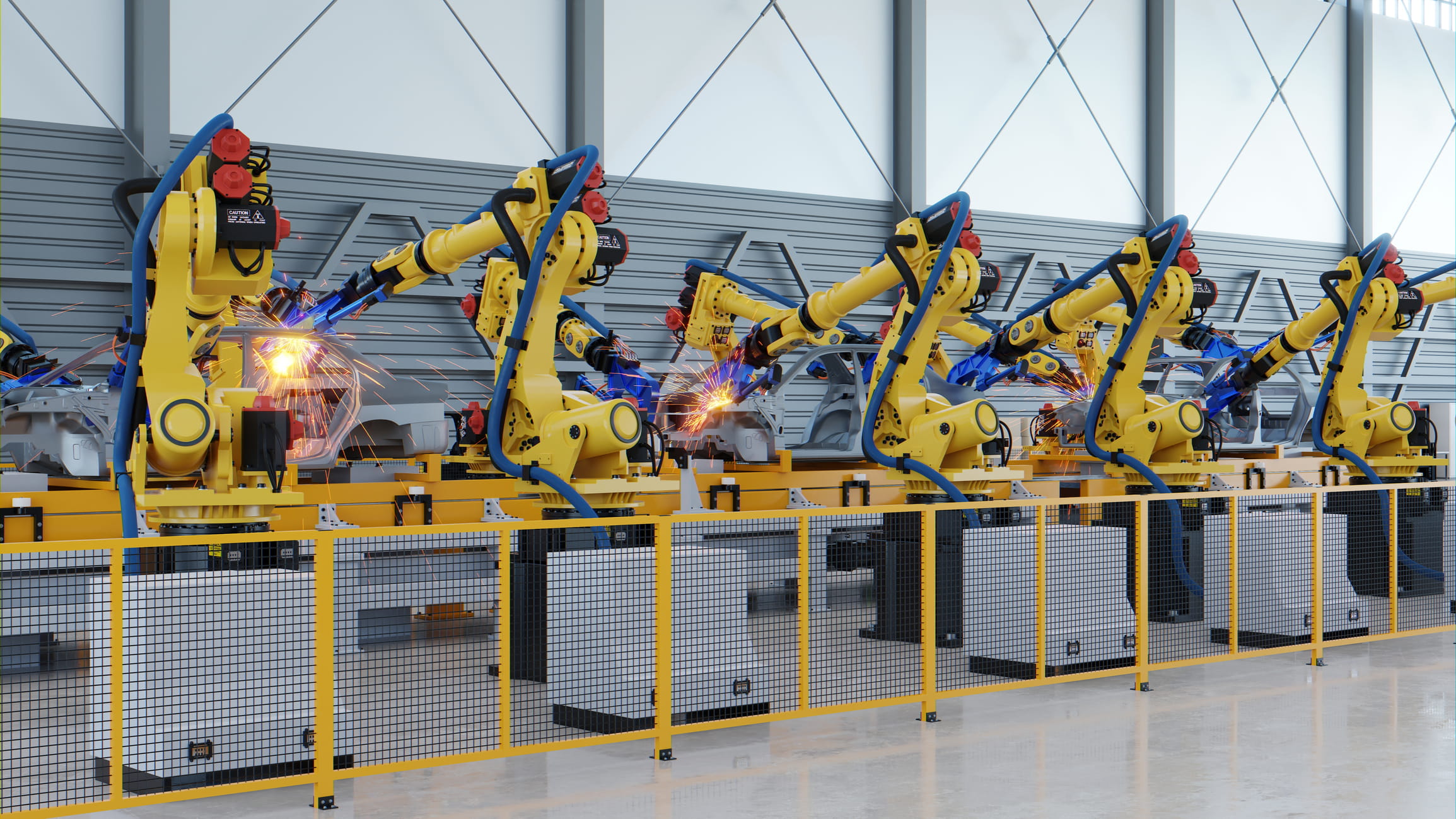
Robots perform repetitive production tasks with speed and precision.
Industrial arms handle welding, painting, gluing, fastening, and component installation with consistent accuracy.
Automation speeds up production and ensures uniform quality, with fewer defects.
Robotic arms can run continuously with minimal downtime.
They also relieve workers from repetitive, fatiguing jobs, reducing fatigue-related errors and minimizing ergonomic risks such as heavy lifting and repetitive-motion injuries. A well-designed cell assembles parts accurately every cycle.
Even more complex operations are now automated. For example, robots apply precise welds and adhesive beads along body parts with consistent placement.
Collaborative robots are also deployed for delicate or flexible operations. Cobots can work in tighter spaces and can be reprogrammed quickly for new models.
2. Quality Inspection with Vision & AI
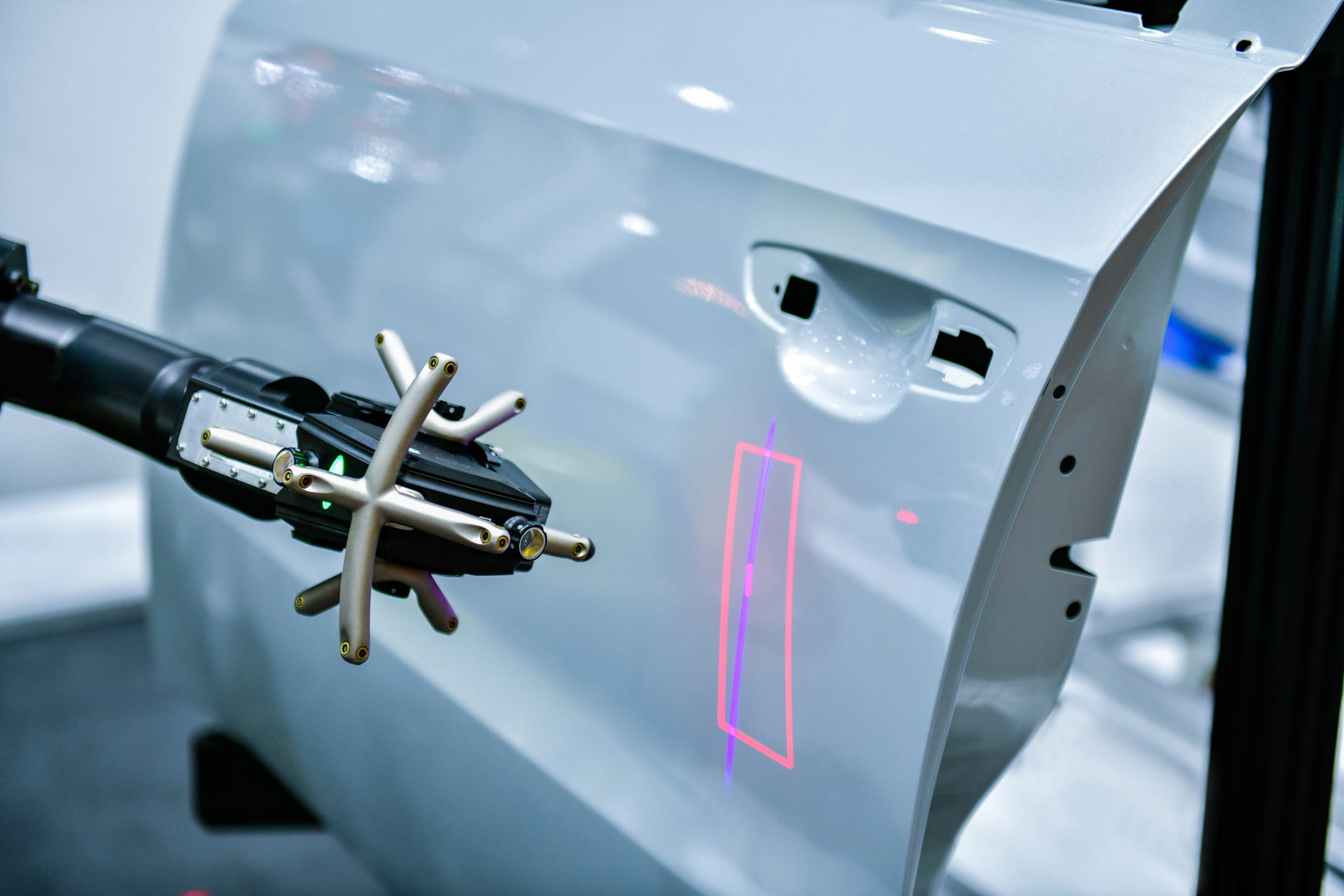
Automation does not end at assembly. AI-powered vision systems inspect parts in real time with high accuracy.
Cameras and sensors scan for tiny defects as parts move down the line, and algorithms compare pieces to digital specifications instantly.
Machine vision catches flaws that human inspectors can miss. This improves quality control and reduces scrap.
Advanced systems can detect defects with up to 95–99% accuracy. By identifying issues early, suppliers avoid wasted time and materials on assemblies that would fail later checks.
3. Automated Overhead Cranes and AI-Powered Conveyors
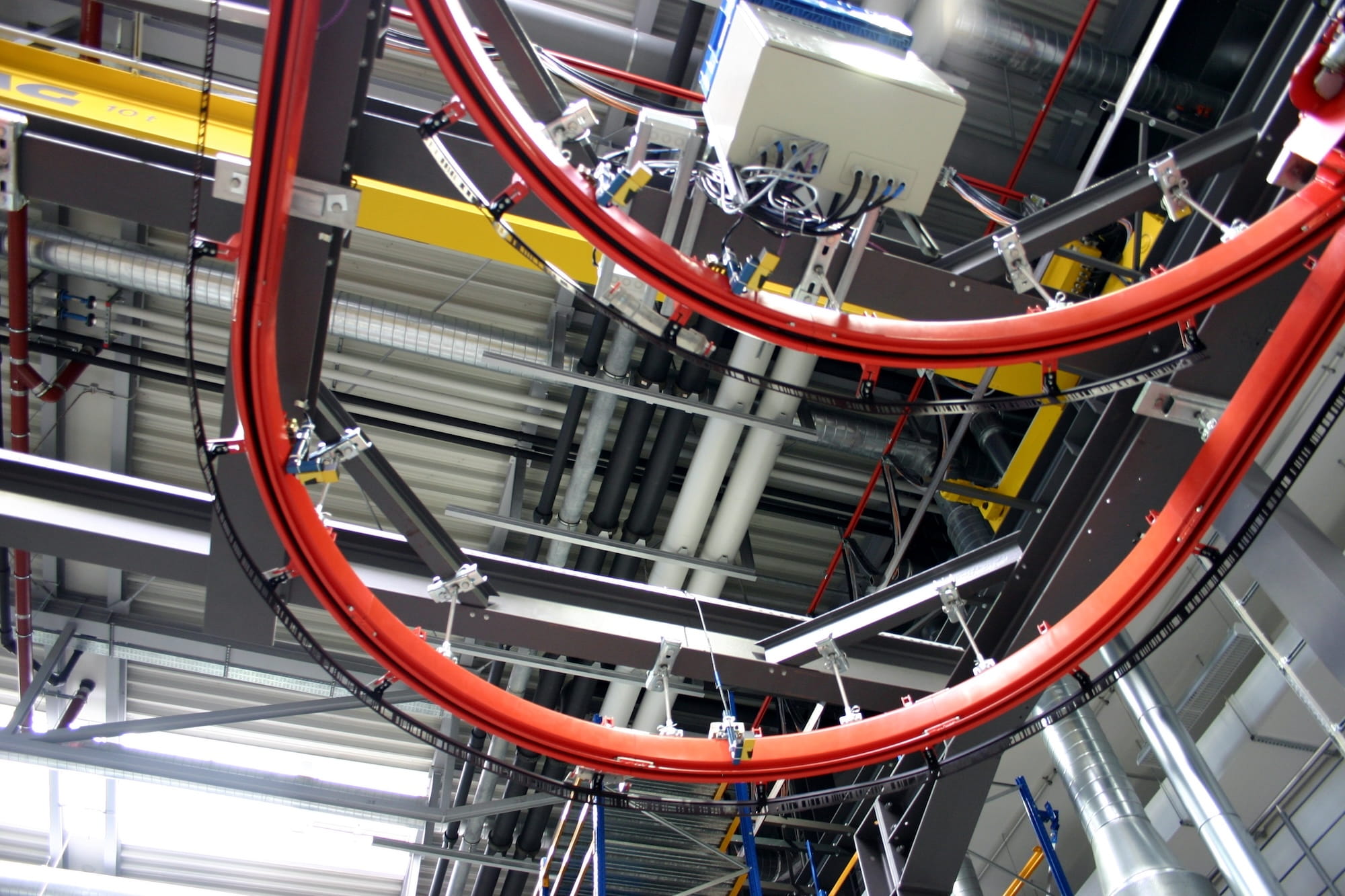
Moving heavy materials is another strength of industrial automation.
Automated overhead cranes lift and transport bulky parts with minimal human input. By working above the floor, they free space and reduce forklift traffic and collision risks.
AI-powered controls use sensors and cameras to plan efficient movement, avoid obstacles, and coordinate multiple hoists as needed. This reduces bottlenecks and improves safety.
On the factory floor, AI-guided conveyor systems and autonomous mobile robots (AMRs) ensure the right parts arrive at the right station at the right time. These systems dynamically adjust to production demand. If one line slows down, they reroute parts to buffer areas or parallel lines to keep production on track.
4. Flexible Retooling and Changeovers
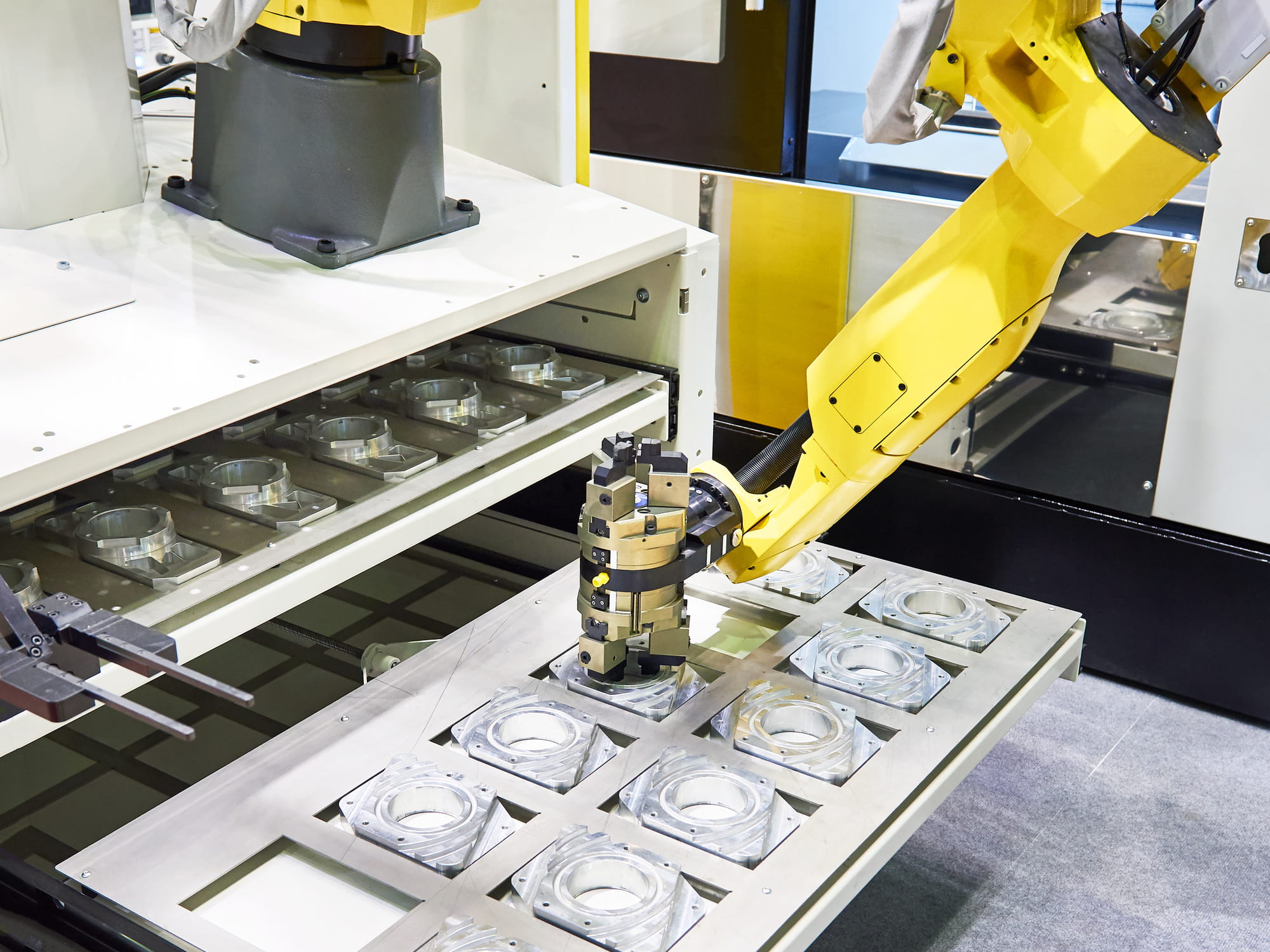
New models, EV components, and custom orders require frequent retooling. Traditional fixed lines struggle here, with reconfiguration taking days or weeks. Suppliers are adopting modular robotic cells and programmable equipment that support faster changes.
A robotic cell used for one model can be re-taught to handle a variant with minimal hardware changes.
Flexibility also means scalability. To increase volume, an additional robot or cell can be added. Programmable automation allows these adjustments without major retraining staff or rebuilding lines.
Leading automakers are moving toward modular layouts: smaller adaptable cells linked by smart conveyors and unified controls. This supports faster model introductions and more diverse contracts for suppliers.
5. Human-Robot Collaboration
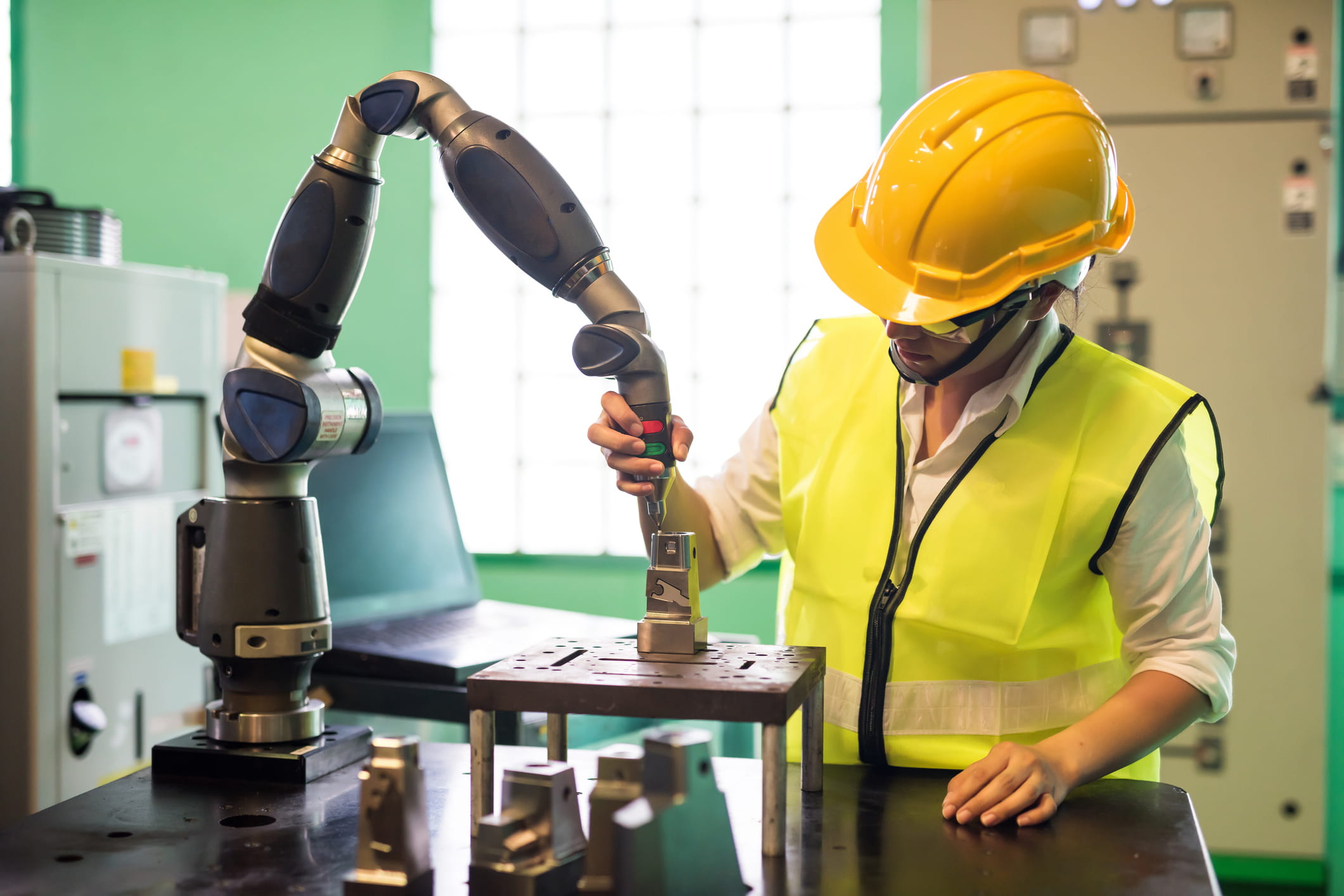
Not every task can be fully automated. Cobots are designed to work safely beside human teammates, using sensors to avoid collisions. They share workstations and combine strengths: robots manage repetitive, precise actions while humans handle the variable or detail-oriented steps.
Automotive suppliers use cobots for light assembly, screwdriving, dispensing adhesives, machine tending, and quality tests. A common setup is a cobot taking over the repetitive movement while a human performs final inspection or custom touches. This improves consistency and throughput while reducing ergonomic strain.
Why It Matters
Automation isn’t about fancy technology for its own sake. It's about meeting core business goals in a challenging industry. Automotive suppliers face constant pressure to increase output, improve uptime, and achieve near-zero defects. OEM clients expect parts delivered just-in-time, in perfect condition, and at competitive costs.
Model mix is increasing, and product lifecycles are shortening, which demands agility. Global competition and strict regulatory standards further compress margins. In this environment, automation becomes a foundational driver of operational performance and long-term competitiveness:
Here is why automation has become mission-critical for automotive OEM suppliers today.
- Relentless pressure for output, uptime, and zero defects
Suppliers must maximize throughput and equipment uptime while maintaining flawless quality under tight schedules and cost constraints. - Just-in-time delivery and rising OEM expectations
OEMs demand accurate, on-time delivery with minimal tolerance for delays or defects.. - Increasing model mix and shorter lifecycles
Frequent changeovers and varied production configurations require flexibility that purely manual processes struggle to support. - Global competition and regulatory compliance
Tough cost pressures and compliance requirements raise operational expectations across the board. - Operational excellence driven by measurable KPIs
Automation improves throughput, first-pass yield, cycle time, downtime reduction, and OEE. These metrics directly impact profitability and supplier reputation. - Productivity gains beyond manual capability
Robots and AI deliver consistent quality and output with fewer errors, lowering scrap, rework, and customer complaints. - Future competitiveness depends on automation
Industry research shows manufacturers expect digital technologies to increase efficiency significantly in the next three to five. These gains are essential for supplier viability and growth.
Where Automation Hits Resistance
If automation offers so much upside, why is adoption uneven? Many suppliers face organizational, financial, and technical barriers as they introduce robots and AI into existing production lines.

- Persistent downtime during integration
Initial deployment can cause disruptions until systems stabilize. - Complex integration with legacy equipment
Blending advanced robotics and software with older machinery often requires customization. - Organizational resistance and workforce concerns
Teams may worry about job impacts or lack comfort with new technology. - Skills gaps and retraining demands
Automation requires programming and analytical skills many plants must develop or hire. - Upfront costs and ROI scrutiny
Capital investment remains a hurdle when ROI visibility is limited. Evaluate ROI. - Pilot purgatory and lack of scale
Many companies complete pilots but fail to expand due to unclear ownership or fragmented planning. - Data overload without insight
Automation produces large data volumes, but converting them into action can be difficult. - Quality assurance hesitancy
Leadership wants evidence that automation will raise quality, not simply maintain it.
The Path Forward: Smart, Scalable Manufacturing
For automotive suppliers, successful automation is a continuous improvement journey. Leading plants begin with targeted projects tied to clear business goals. They focus on high-impact constraints where technology can measurably improve performance. Early wins build confidence and accelerate wider deployment across the factory.
Flexibility is also essential. Modular, upgradable systems help avoid dead-end investments. Equipment that can adapt to new products supports fast changeovers and scalable production growth.
Data must be leveraged to drive decisions instead of overwhelming teams.
Human capability remains a core requirement. Upskilling workers and involving them in the transition builds acceptance and supports long-term success.. Many organizations partner with experienced automation integrators to guide system integration, training, and technical validation. They bring proven methods that minimize disruption and avoid avoidable trial-and-error.
Ultimately, the companies that lead will be those that embrace automation as an evolving strategy.
FAQs
It enables higher output, better quality, and greater uptime while meeting just-in-time delivery and cost targets.
Throughput, first-pass yield, cycle time, downtime reduction, and OEE.
Integration complexity, skills gaps, upfront capital, organizational resistance, and unclear ROI.
Companies often stall after pilot phases due to fragmented data, unclear value cases, and change management issues.
Targeted priorities, modular systems, data-driven improvement, workforce development, and a long-term scalability approach.