Engineer Outcomes, Not Just Automation
When output stalls or quality slips, we design systems that restore flow, protect your brand, and help you scale with confidence.
Are production delays and manual rework eating away at your output and consistency? PMi2 specializes in building and integrating custom automation solutions to increase your profitability without compromising product quality.
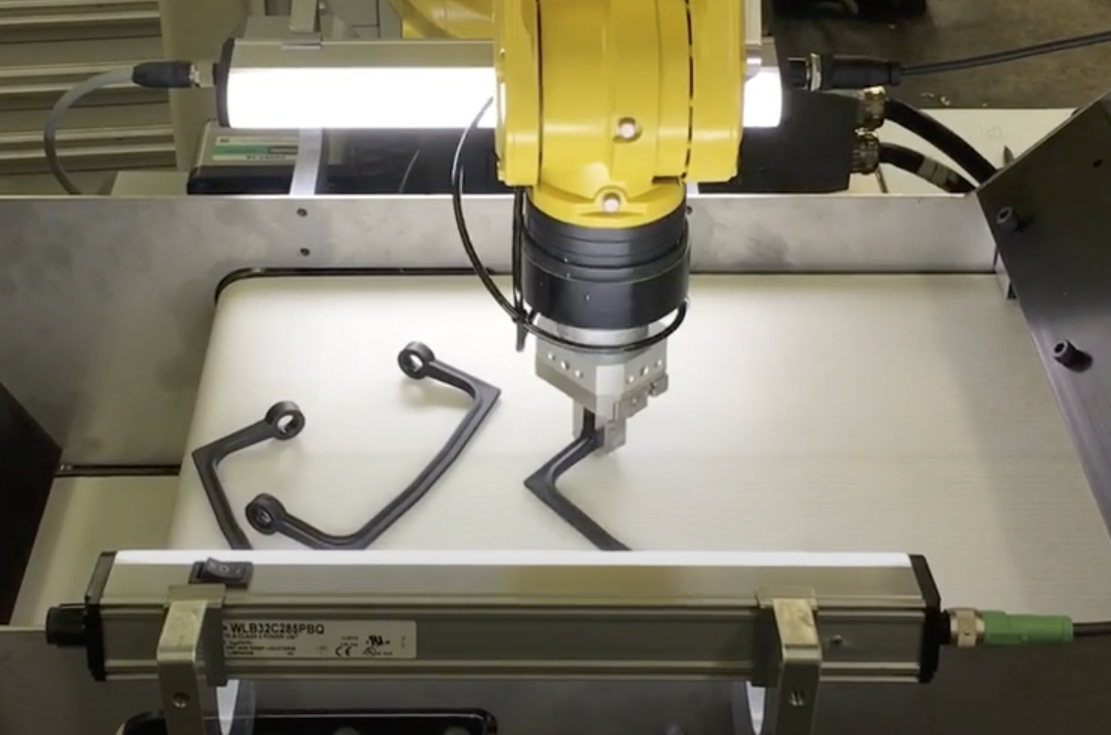
From robotics to inspection, we design systems that clear production hurdles, boost reliability, and help you scale without compromise.
By integrating FANUC systems for CNC, pick-and-place, assembly, and inspection, we enhance uptime, reduce labor strain, and deliver consistent performance.
End labor and quality bottlenecks with systems that increase precision and productivity. We help you establish your competitive edge.
When quality slips, costs rise. Our AI-powered inspection systems detect defects early, reduce waste, and ensure every part meets your standards.
Disconnected systems cause downtime and drift. We engineer and program industrial controls that keep your automation precise, reliable, and ready to scale.
Manual part handling slows everything down. Our flexible systems enhance accuracy, increase throughput, and keep your line moving smoothly.

As a trusted FANUC ASI partner, we design and integrate FANUC robotic systems that scale with your line, connect with your tech stack, and deliver the uptime your team depends on.
From concept to commissioning, we bring clarity, speed, and technical depth so your operation moves faster and performs better.
When output stalls or quality slips, we design systems that restore flow, protect your brand, and help you scale with confidence.
We tailor every automation system to your process—so you get flexibility, reliability, and results that fit your operation, not someone else’s.
We design automated solutions that adapt fast—so you can pivot, retool, and grow without starting from scratch.
From concept to commissioning, we bring the technical depth and project clarity you need to move fast and deliver results.
We re-engineered a domestic automation system that boosted output, reduced footprint, and improved long-term reliability, with easier maintenance and local support.
Customer Project Highlights
It's not just a process and a certificate to hang on the wall. It's who we are. Our commitment to quality and security is the only way.
Learn how we support customers from day one, from machining to automation, design services, and more.
Connect with Automation ExpertsThey design, build, and implement custom automation systems tailored to your production process. This includes robotics, controls, software integration, and post-installation support to improve throughput, quality, and efficiency.
Ideally, early. A good integrator helps define specs based on your goals, constraints, and existing systems—preventing costly rework or mismatched equipment later.
If you're facing labor shortages, inconsistent quality, rising demand, or repetitive manual tasks, you're likely ready. A discovery session with an integrator can help assess feasibility and ROI.
Look for deep technical expertise, proven experience in your industry, strong project management, and the ability to integrate with your existing systems. These traits ensure the integrator can deliver a solution that fits your process, scales with your goals, and performs reliably under real-world conditions.
Evaluate based on engineering depth, past project outcomes, support structure, scalability of solutions, and how well they understand your process. Don’t rely solely on price or brand names. Look for alignment with your operational goals.
Machine builders focus on standalone equipment. Integrators connect machines, software, and controls into a cohesive system that works with your floor, people, and goals.
Timelines vary by complexity, but most projects range from 3 to 9 months. Early planning, precise specifications, and swift decision-making can significantly reduce lead times.
Expect comprehensive training, detailed documentation, remote diagnostics, access to spare parts, and on-site service. Ask about service agreements and response times before you commit.
Often, yes. Skilled integrators can retrofit or bridge legacy systems with modern controls, sensors, and software, thereby extending their useful life while improving performance.
They adhere to industry standards, including ANSI/RIA, OSHA, and ISO. Risk assessments and safety systems are built into the automation from day one.
ROI depends on labor savings, cycle time improvements, scrap reduction, and uptime gains. A good integrator will model ROI based on your actual process and goals.
Look for integrators who offer simulation, prototyping, or Factory Acceptance Testing. These steps validate performance before installation, reducing commissioning risk.
Industries with repetitive tasks, high precision needs, or labor constraints benefit most. This includes automotive, electronics, medical devices, and industrial manufacturing.
Vendors sell hardware. Integrators make it work in your environment—engineering the controls, vision, software, and mechanical interfaces to deliver results.
Ask about past projects, team structure, change management, support plans, and system integration experience. Also, ask how they handle scope changes, delays, and post-installation service.