

Metal additive manufacturing (AM) planning follows a consistent pattern, with engineers checking the boxes: machine capability, material selection, part geometry, orientation, process parameters, and post-processing. Every established framework covers this ground, and covers it well.
One box is missing.
The build plate sits beneath every variable that made the list, yet its condition is rarely evaluated before a build starts. It gets assumed.
That's a gap, not a flaw. Build plate condition matters twice: once before and during the build, where it affects setup and control, and once after, when the plate gets removed in post-processing. Published guidance accounts for the second moment. It rarely accounts for the first.
This isn't a case for a new planning framework. It's a case for one more box: confirm build plate condition instead of assuming it.
Metal AM Planning Covers the Process. What About the Build Surface?
Metal additive manufacturing planning pays deliberate attention to machine capabilities, materials, geometry, orientation, process parameters, and post-processing. Every established framework treats these as decisions, not defaults.
Two current standards show how far that discipline extends.
| Standard | What it covers |
| ISO/ASTM 52904:2024 | Operation and production control for metal powder bed fusion in critical applications |
| ISO/ASTM 52908:2023 | Qualification, quality assurance, post-processing, inspection, and testing of metal PBF parts |
Together, the standards span a wide stretch of the production lifecycle. Neither claims to be a single checklist for every project. AM standards cover different portions of that lifecycle rather than forming a single universal planning document.
Variables
Commonly Covered in Metal AM Planning
- Machine capability
- Material selection and qualification
- Part geometry
- Part orientation
- Support structures
- Process parameters
- Post-processing
- Inspection
These variables routinely receive explicit consideration before production. Build plate condition can remain implicit.
That leaves a straightforward question: What condition is the physical surface on which the build starts? The industry hasn't ignored build plates. The narrower issue is that plate condition is frequently treated as an operational detail rather than a planning variable. That gap begins there, with the role the plate plays during a build.
The Build Plate Is Part of the Production Setup, Not Just a Part to Remove Later
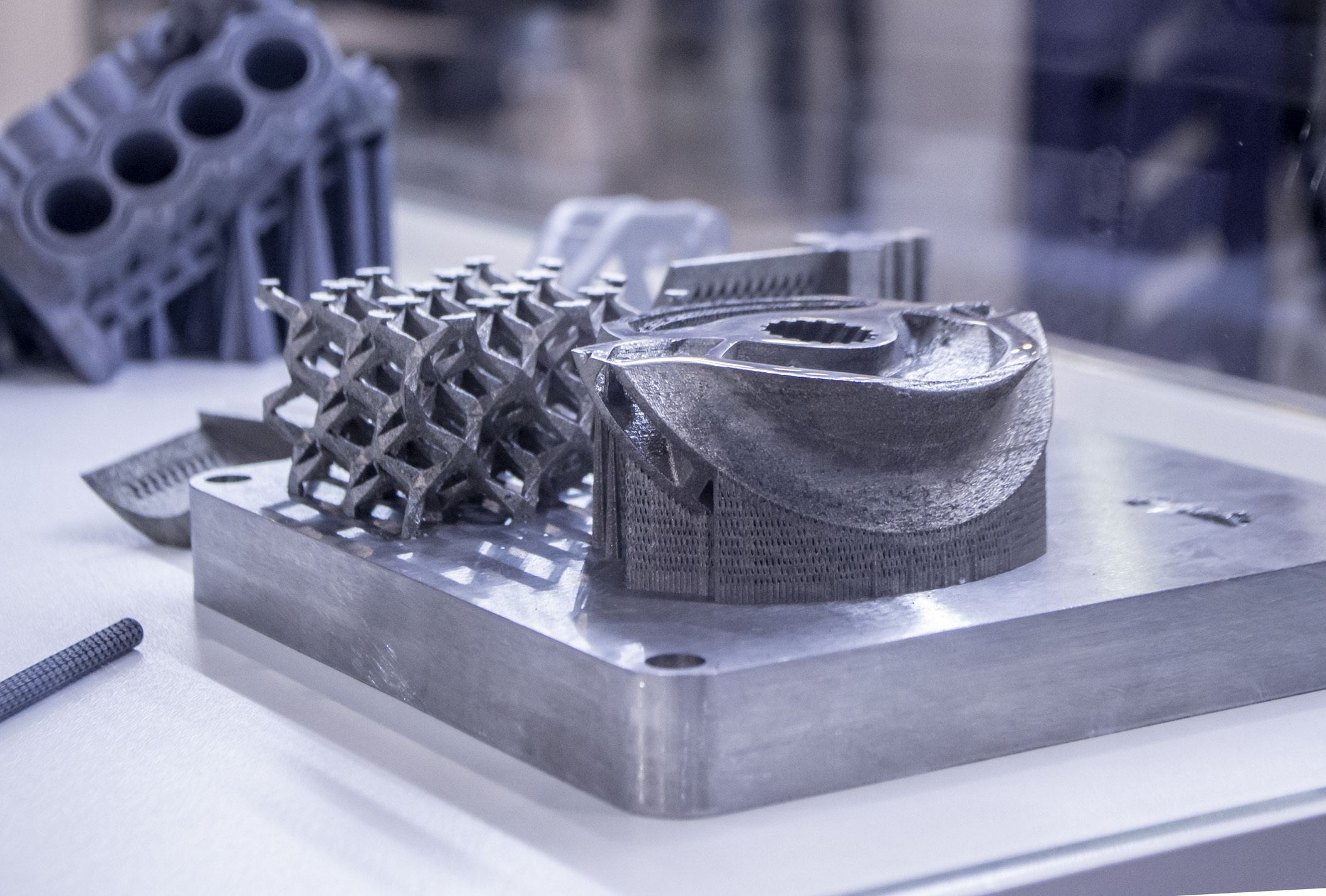
A build plate is a physical production input because metal powder bed fusion forms the initial material layers on the build platform, even though the platform is later removed during post-processing.
A build starts with metal powder deposited on that platform. The part and its support structures form relative to it, layer by layer.
Terminology varies among shops and technical sources. Build plate is the common shop-floor term. Build platform describes the component by its function.
Substrate refers to the physical surface or material on which the initial layers form. In this context, all three terms point to the physical foundation of the build.
| Stage | Plate's role |
| Before the build | Selection and condition establish the starting point |
| During the build | Physical foundation for the material layers |
| After the build | Separated from the part during post-processing |
ASTM F3530-22, which covers post-build operations for metal laser powder bed fusion parts, identifies build platform removal as one of the post-processing steps alongside powder removal, support removal, machining, and surface finishing.
A component can have a defined post-processing step and still require consideration before production begins. Treating plate removal as a post-processing operation can make its pre-build condition easier to overlook.
Build Plate Condition Is More Than a Clean Surface
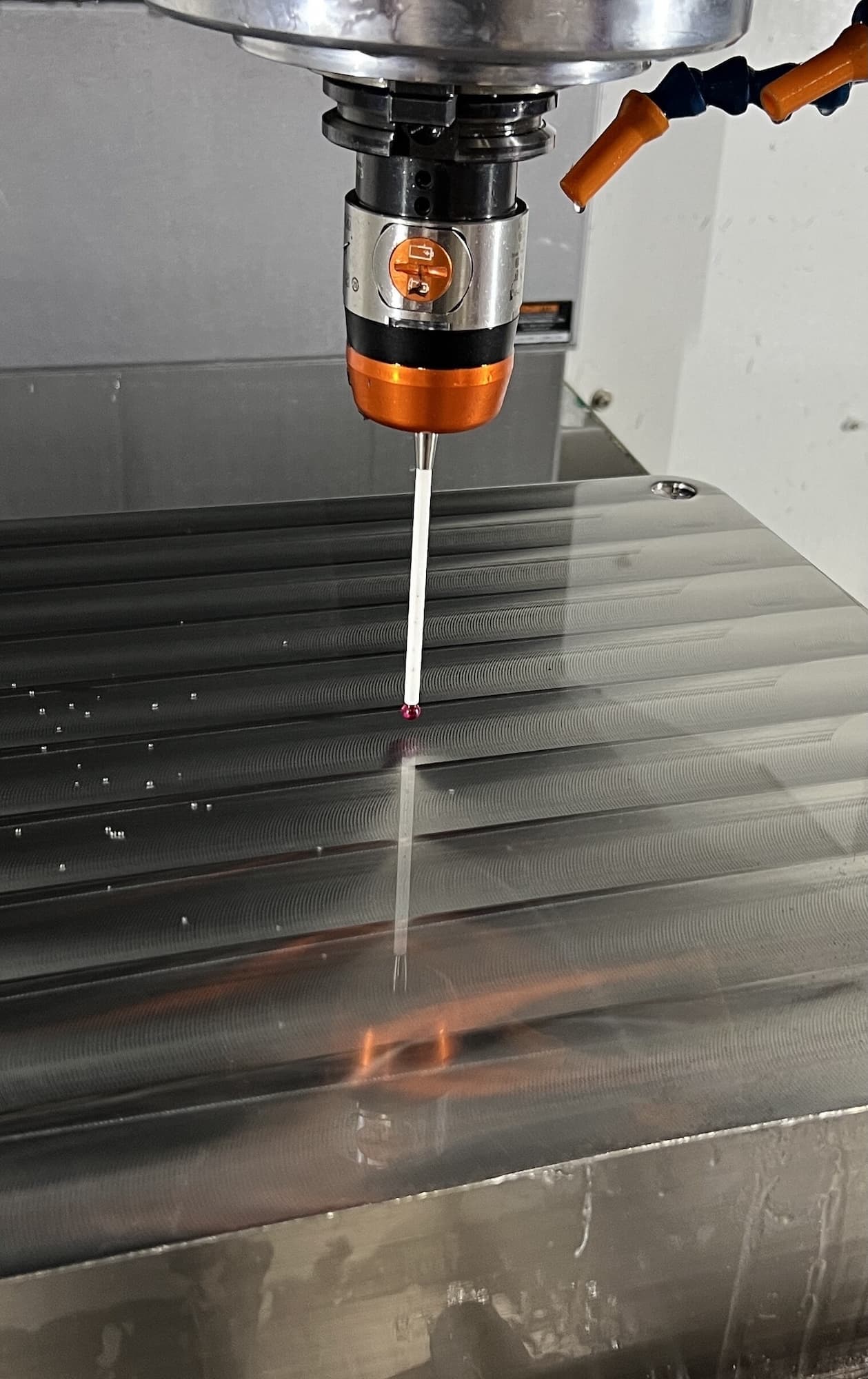
Build plate condition includes physical characteristics and production history that can be evaluated before a build starts.
Two plates can fit the same machine and appear identical at a glance, yet carry different usage and resurfacing histories. Their condition and suitability may differ, and that difference is difficult to evaluate without a record.
What "Condition" Covers
- Surface condition
- Flatness
- Dimensional condition
- Evidence of wear or prior damage
- Machining and resurfacing history
- Usage history
- Maintenance history
PMi2’s resurfacing work demonstrates this broader view of plate condition by treating flatness, surface roughness, quality inspection, and machine compatibility as related considerations.
| Fact | Why it matters |
| Repeated machining or resurfacing removes material | Material removal can change a plate's dimensions over time |
| Plate identification connects a plate to its history | Production teams can evaluate plates with different usage and maintenance records against current requirements |
Conditions should be evaluated against the specific machine, process, material, and application instead of a universal standard. Defining the relevant characteristics is the first step. The next is bringing those characteristics into production planning.
Make Build Plate Evaluation Part of Production Planning
Build plate evaluation extends an existing AM planning process through identification, inspection, usage tracking, maintenance decisions, and supplier qualification.
Before assigning a production plate to a new build, the manufacturing team confirms its identity, condition, and history against the requirements of that application.
Practical Evaluation Sequence
- Identify the plate.
- Confirm the applicable inspection requirements.
- Review its usage history.
- Review its maintenance and resurfacing history.
- Compare its condition with project requirements.
- Determine its disposition.
- Record the decision.
That sequence can lead to three primary outcomes. Resurfacing is one option.
| Disposition | When it applies |
| Use | The plate’s condition and history meet the build requirements |
| Resurface | Evaluation determines that resurfacing is appropriate within the plate’s dimensional limits |
| Replace | The plate no longer meets requirements or resurfacing is not appropriate |
Supplier qualification also warrants consideration when plates are newly manufactured, reconditioned, or sourced externally. ISO/ASTM 52920:2023 provides a broader qualification context for industrial AM processes and production sites.
The plate requirements still need to correspond with the application and supplier arrangement.
Manufacturers like PMi2 produce new-build plates and resurface existing ones, treating plate management as a single lifecycle. PMi2’s additive manufacturing capabilities span new plate production, resurfacing, modifications, and inspection.
Build plate resurfacing fits within that lifecycle as one possible disposition.
Adding these checkpoints establishes what to evaluate without creating a separate planning methodology.
The Goal Is Better Control, Not Another AM Checklist
Build plate condition should complement established machine, material, geometry, and process controls. Requirements vary by process, machine architecture, material, and application, so the appropriate evaluation criteria will also vary.
Not every AM process uses a build plate in the same way. Machines and applications can also impose different plate and inspection requirements. Depending on those requirements, a used plate may be approved for another build, resurfaced, or replaced.
| Established AM planning | Additional physical input |
| Machine capability, material, geometry | Build plate condition |
| Orientation, process parameters | Plate identity and usage history |
| Post-processing, inspection | Maintenance history and disposition |
Plates evaluation belongs within the qualification, quality assurance, inspection, traceability, and production-readiness practices teams already use. It should not be treated as a universal inspection mandate or as proof that plate condition caused a particular production result.
Manufacturers that both produce and resurface build plates, PMi2 among them, bring a useful perspective to this lifecycle. The underlying issue, however, remains one of planning discipline, not any single supplier's services.
What Changes When Plate Condition Becomes Explicit
Making build plate conditions explicit creates a more complete record of the physical conditions under which a build was produced. It also gives engineering another traceable variable during production investigations.
When two builds produce different results, engineers can compare plate identity, usage history, and maintenance status with the machine, material, geometry, process parameters, and inspection results.
What a Plate Record Adds
- Better traceability
- More complete production records
- More focused troubleshooting
- A documented plate disposition
- Clearer supplier requirements
- Documented production-readiness reviews
A plate record doesn't prove causality on its own. It provides another input to consider alongside machine, material, geometry, orientation, process parameters, inspection results, and post-processing.
Build Plate Condition Belongs in the Conversation
Metal AM planning already provides a disciplined review of machine capability, material, geometry, orientation, process parameters, and post-processing before production. Build plate condition should receive the same deliberate consideration.
The addition fits within the planning process already in place. Confirming plate condition as a physical production input closes a gap that can otherwise remain implicit.
Build plate condition is another box to add to the metal AM planning process.
Contact Us
Working With Us
Learn how we support customers from day one, from machining to automation, design services, and more.
Contact UsBuild Plate Condition: Common Questions in Metal AM Planning
No. Build plate condition is a physical variable independent of machine capability, powder specification, part geometry, and build parameters. A well-maintained machine does not guarantee a plate's surface, flatness, or dimensional condition is current.
The terms describe the same physical component from different angles. Build plate is the common shop-floor term, while build platform describes the component by its function during the build.
Build platform removal is a post-processing step, but the plate's condition matters earlier, before and during the build, where it affects setup and control. A component can have a defined post-processing step and still require evaluation before production begins.
Published standards address related areas. ASTM F3530-22 identifies build platform removal as part of post-processing, and ISO/ASTM 52904:2024 and ISO/ASTM 52908:2023 address production control, qualification, and inspection more broadly. No standard referenced here mandates build plate inspection specifically.
No. Evaluation can lead to one of three outcomes: use, resurface, or replace. Resurfacing applies when a plate's condition and history support it within its dimensional limits, not as a default response to every used plate.
Not automatically. Prior acceptable results reflect that project's specific requirements at that time. Usage and maintenance history give a production team the record needed to evaluate suitability for a new build rather than assume it.