
Automation Cell Integration
Increase What Your Equipment Produces
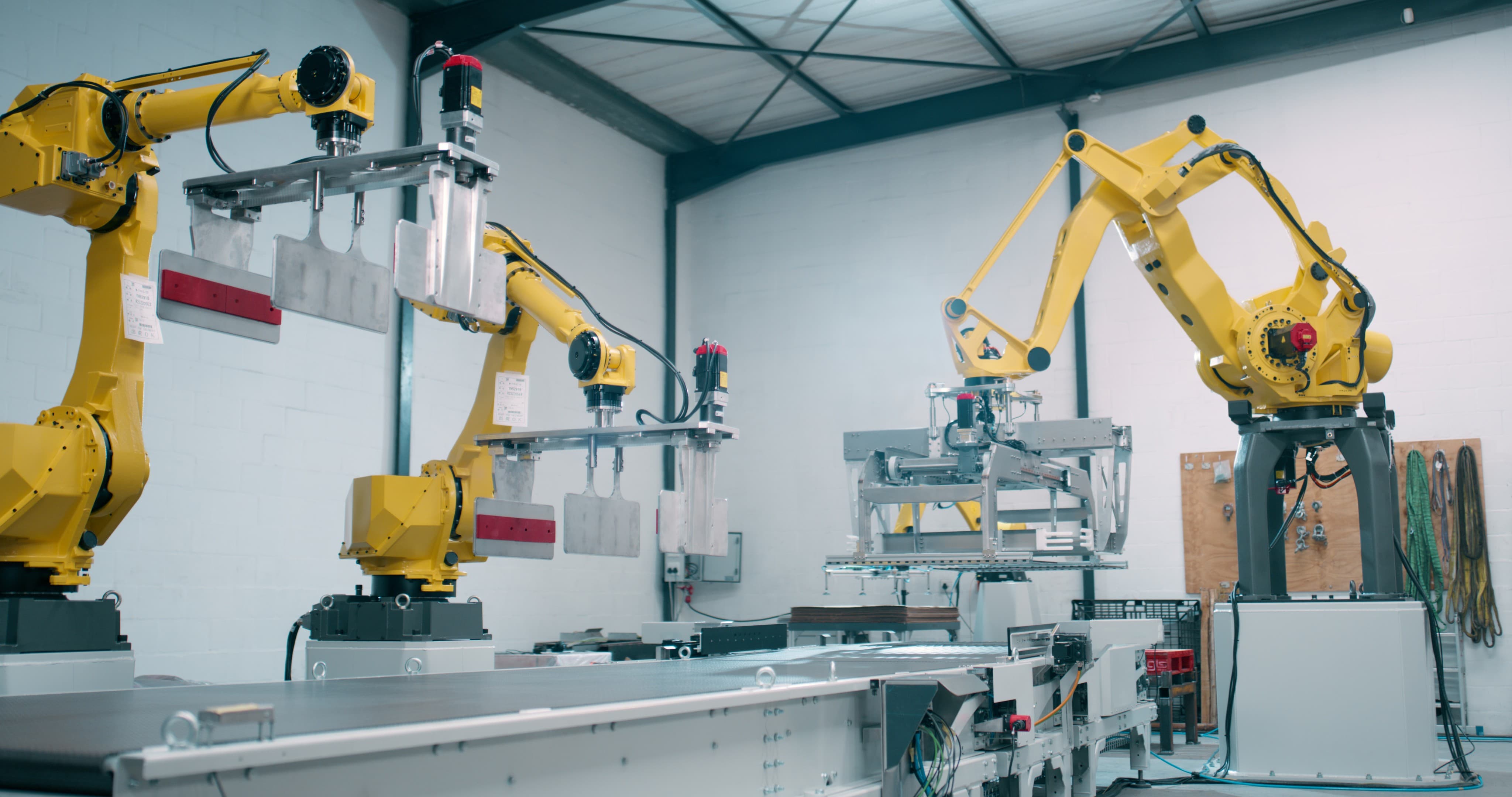
Your machines already have the capacity. The constraint is everything around them. PMi2 designs targeted automation cells that remove the manual steps between cycles, so your equipment produces at its full rated capacity.
Where Output Gets Lost
Production Losses Happen Between Cycles
Most production loss doesn’t come from the machine. It comes from what happens before and after each cycle.
Short pauses stack across hundreds of cycles per shift. The result is lost capacity that never shows up on a report, but impacts output every day.

Capabilities
How PMi2 Approaches Automation
PMi2 integrates robotic automation cells directly into your existing production environment. Each solution is engineered for a specific constraint, so you improve output without compromising the rest of the line.
-
What We Deliver
- Robotic automation for CNC, fabrication, molding, and assembly
- Part handling and transfer system design
- Vision-guided inspection and picking systems
- Flexible automation for high-volume and high-mix production
- Retrofit-ready solutions for existing equipment
-
The Process
- Identify the process constraint
- Define the task limiting flow
- Engineer a targeted automation cell
- Integrate with existing machines and workflow
- Deploy with minimal disruption to production
CNC Automation Cells
Recover Spindle Time Without Expanding Capacity
CNC equipment loses output when it waits. These automation cells remove the delays that keep spindles idle and recover capacity already present in your machines.
Keep the spindle cutting, not waiting. Robots load and unload parts so machines run continuously without operator delays.
-
CNC Machine‑Tending Cell
Keep the spindle cutting, not waiting. Robots load and unload parts so machines run continuously without operator delays.
-
Multi-Machine Automation
One system supports multiple machines. A single robot balances cycle timing and keeps throughput steady across the cell.
-
Palletized Production
Extend runtime and reduce interruptions. Fixtures are staged outside the machining area so production continues during setup.
-
Unattended Operation
Keep production running beyond the shift. Automated loading and monitoring support lights-out machining overnight and on weekends.
-
Vision Inspection and Gauging
Catch variation early. Automated inspection verifies critical dimensions immediately after machining to reduce scrap and rework.
-
Deburring and Wash
Keep finishing synchronized with production speed. Automated systems remove burrs and clean parts before they move downstream.
-
Laser Marking
Build traceability into the process. Laser systems apply serial numbers, QR codes, or data matrix identifiers directly to parts.
-
Multi-Process Handling
Maintain continuous flow between operations. Robots transfer parts along sequential steps without manual handling.
Beyond CNC
Delays Show Up Everywhere. Automation Solves Them the Same Way.
The same production gaps seen in machining show up in welding, stamping, molding, and assembly. Automation cells remove the delays between steps so production flows predictably from one operation to the next.
-
Robotic Welding
Maintain consistent weld quality across every part. Robots execute programmed weld paths with repeatable parameters, reducing dependency on certified welders.
-
Press Tending
Keep presses running at full speed. Robots handle part feeding, positioning, and removal to maintain steady cycle timing.
-
Injection Molding Tending
Increase output without adding operators. Robots remove parts, trim sprues, and stage components directly from the mold.
-
Robotic Assembly
Bring repeatability to precision tasks. Robots reliably align, fasten, apply adhesive, and place components with high accuracy.
-
Palletizing & Packaging
Match end-of-line handling to production speed. Robots stack, sort, and stage parts so that downstream processes don’t become bottlenecks.
-
Vision Inspection, Sorting & Verification
Maintain quality without slowing output. Vision systems verify dimensions, presence, and surface conditions within the production flow.
-
Automated Kitting
Ensure every kit arrives complete and accurate. Vision‑guided robots pick components and place them into organized trays to keep the assembly running smoothly.
-
Robotic Dispensing & Coating
Improve consistency in adhesive and coating applications. Robots follow programmed paths and control flow rates so every bead and layer is applied the same way every time.
Certifications
It's not just a process and a certificate to hang on the wall. It's who we are. Our commitment to quality and security is the only way.
Production Gap
The Machine Is Ready. The Process Is Not.
When operators control cycle time, output is limited by labor instead of machine capacity. As variability rises, the gap between potential output and actual production continues to grow.
Operational Risks
- Loss of available machine capacity
- Rising labor costs without output gains
- Difficulty staffing repetitive roles across shifts
- Production variability that is difficult to trace
- Bottlenecks that shift instead of resolving
Business Impact
- Higher cost per part
- Missed production targets
- Reduced competitiveness in delivery and pricing
What Changes
Targeted Automation Enhances Output Without Expanding Your Facility
When the right constraint is addressed, production stabilizes. Output becomes more predictable and gains compound growth as automation expands across the process.
- Higher utilization of existing equipment
- Stable cycle timing across shifts
- Reduced dependency on manual intervention
- Increased throughput without facility expansion
- A scalable foundation for future automation
Contact Us
Request an Automation Assessment
Show us where production slows down. PMi2 will define the constraint, design the right automation cell, and integrate it into your existing process.
Speak with an Integration Specialist