
Case Study | Powertrain Manufacturer
One Automated Cell Does the Work of 16 Manual Stations
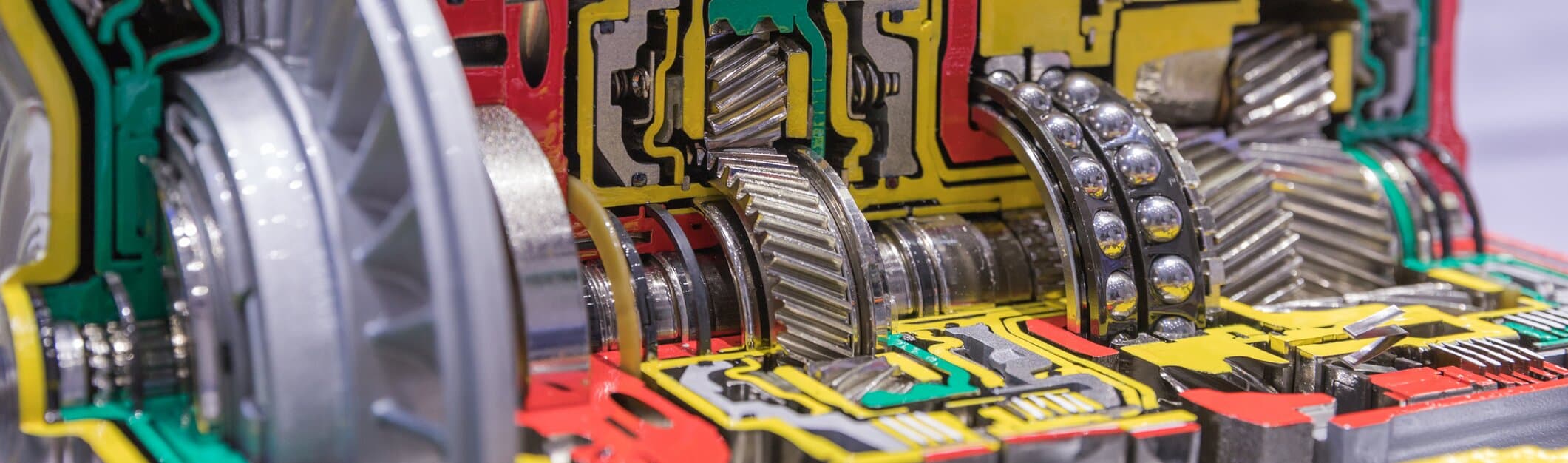
A Tier-1 powertrain supplier operated a labor-intensive, semi-automatic bearing assembly line.
PMi2 designed and built a fully automated transmission assembly cell that consolidated 16 manual stations into a single unit, with a single operator overseeing the entire process.
The solution eliminated approximately 45 operator shifts, added 100% in-line quality inspection, and returned the full capital investment in under 9 months.
CEO Snapshot
45
Shifts Eliminated
Shifts Eliminated
1:4
One operator, four machines
One operator, four machines
100%
In-Line Inspection
In-Line Inspection
< 9
Months for ROI
Months for ROI

Background & Challenges
A Tier-1 supplier assembled automotive transmission bearings using semi-automatic machines that required one operator per machine. After assembly, parts were manually moved to separate inspection stations before shipment.
This workflow created manual bottlenecks and elevated the risk of inconsistency due to human-dependent operations and separate inspection steps.
Objectives & Scope
The client needed to restructure the staffing, sequencing, and quality control of their bearing assembly.
The project covered the full production cell, from assembly through inspection, with defined performance and financial targets.
- Consolidate 16 manual stations into a single automated cell
- Reduce operator-to-machine ratio from 1:1 to 1:4
- Eliminate post-assembly inspection through 100% in-line quality control
- Improve bearing consistency and reduce defect risk
- Achieve full ROI in under 9 months
Approach & Execution
Full-Sequence Automation
One automated cell now performs the complete bearing assembly process, replacing 16 manual stations.
In-Line Inspection
Quality inspection is embedded directly into the new system’s workflow, eliminating the need for a separate inspection step.
Operator Efficiency
The architecture of the new automation cell allows one operator to oversee four machines simultaneously.
ROI as a Design Constraint
Cycle time, cell layout, and changeover decisions were optimized to accelerate payback on their investment.
PMi2 designed and built a turnkey automated assembly cell that restructured the client's bearing line. The new system integrated assembly and inspection into a single workflow, replacing their previous multi-station process and accelerating return on their investment.
Results & Impact
The redesigned process delivered all these benefits while also improving bearing consistency and overall assembly quality.
1 operator now oversees 4 machines
45 operator shifts were eliminated across 3 production shifts
100% in-line inspection
ROI achieved in under 9 months
Success Insights
Redeploying operators to higher-value roles helps increase automation adoption.
Embedding inspection directly into the production cell eliminates bottlenecks while reducing labor requirements and quality control risks.
A parallel-output design with four machines and one operator enabled the solution to pay for itself through offset costs and improved throughput within 9 months.